What Should You Learn Before Operating an Articulated Loader?
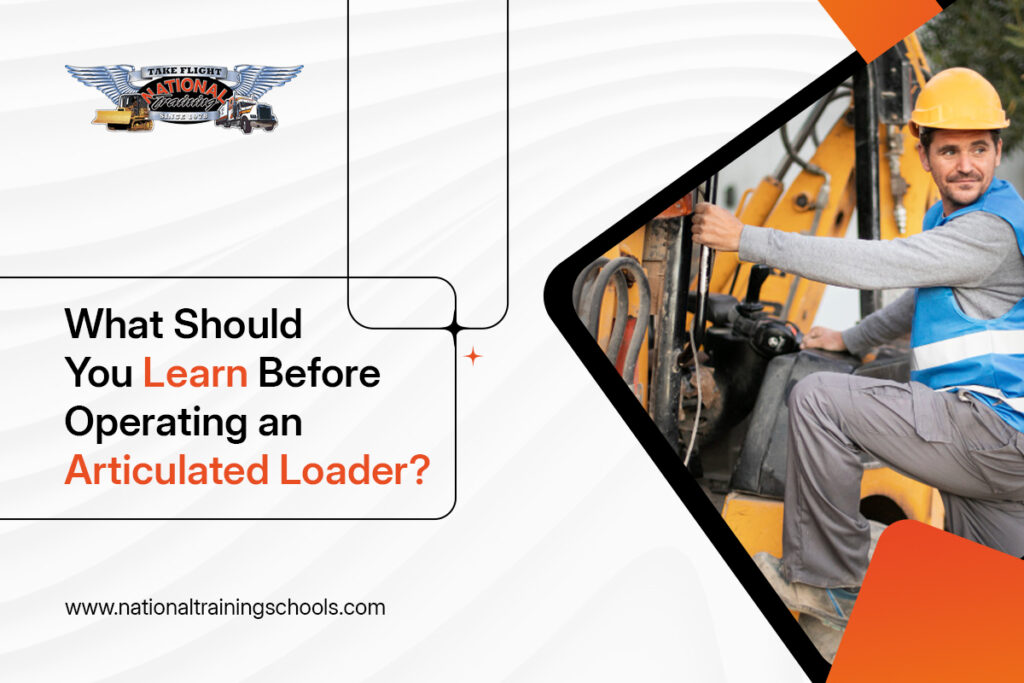
An articulated loader operator needs to understand more than the machine’s basic controls. Before operating one on a worksite, training should cover pre-operation inspections, steering and maneuvering, loading and transporting materials, safe startup and shutdown, equipment awareness, and jobsite safety. Practical training is especially useful because articulated loaders respond differently from conventional vehicles due to their center articulation.
What Is An Articulated Loader?
An articulated loader is a type of wheel loader with a hinged joint between its front and rear sections. Instead of turning through the front wheels alone, the machine changes direction by articulating at this joint. This design gives the loader useful maneuverability but also means that operators need to understand how the front and rear sections move during turns. Articulated loaders are commonly used for tasks involving the movement, loading, carrying, and stockpiling of materials. The machine’s size, configuration, attachments, and operating environment can vary, so operators should always follow the manufacturer’s instructions for the specific equipment they are using.
What Skills Should Operators Learn First?
The first skills generally involve understanding the machine and checking that it is suitable for operation. An operator should know the purpose of the controls, recognize the major components, and understand the basic operating characteristics of the loader.
Pre-operation inspection is another fundamental skill. Before starting work, the operator needs to check the machine’s condition and identify issues such as visible damage, leaks, tire problems, or other conditions that could affect operation. Training should also explain when an issue needs to be reported or addressed before the machine is used.
How Is Material Handling Taught?
Material handling is one of the primary functions of a loader. Operators need to understand how to approach a pile, use the bucket, carry material, and position the machine for loading or placement. Training also needs to address the relationship between the machine, the load, and the surrounding work area. Ground conditions, visibility, load characteristics, and the position of other equipment can all affect how a task should be performed. National Training’s current articulated loader curriculum includes instruction on loading and offloading the machine on a truck, as well as loading, transporting, and storing materials. Its program combines classroom instruction, simulator exercises, and hands-on equipment practice.
What Does Hands-On Training Add?
Hands-on practice allows students to connect classroom information with actual machine behavior. An operator can learn the purpose of a control in theory, but operating the loader provides a different understanding of steering, bucket movement, positioning, braking, and machine response. National Training lists 30 hours of hands-on equipment projects in its current 80-hour articulated loader course. The practical curriculum covers safety performance tasks, prestart inspection and preventive maintenance, startup and shutdown procedures, basic maneuvers, and articulated loader operation.
Does Articulated Loader Training Make Someone Fully Qualified For Every Job?
Not automatically. Training can provide foundational operating knowledge and practical experience, but employers may have their own requirements for experience, assessments, site orientation, equipment familiarity, or other qualifications.
Credentials also need to be distinguished from simply completing a course. National Training states that applicable NCCER Registry credentials may be earned after successful completion of the required modules and assessments; credential attainment is not guaranteed merely by enrolling in or completing training. This distinction matters when comparing training programs or reviewing job requirements.
Conclusion
Learning to operate an articulated loader involves several connected skills. Operators need to understand the machine, inspect it before use, maneuver it carefully, handle materials appropriately, and remain aware of changing jobsite conditions. The strongest foundation comes from combining instruction with practical experience. Classroom lessons can explain the principles, simulators can provide controlled practice, and hands-on equipment exercises can help students understand how those principles apply to an actual articulated loader. For anyone researching operator training, these are useful factors to consider when evaluating what a course offers.