What Equipment is Covered in Tractor Loader Backhoe Training?
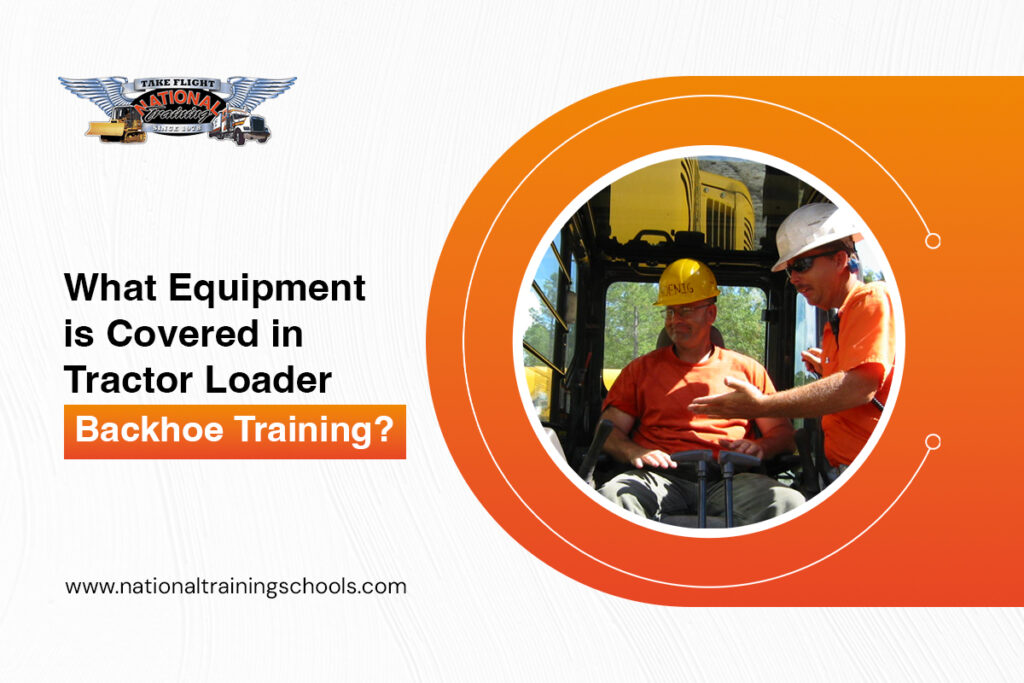
A tractor loader backhoe combines two main functions: a front-mounted loader for moving materials and a rear-mounted backhoe for digging. Operators use the front bucket to scoop and transport soil, sand, and gravel, while the rear attachment handles tasks such as trenching and excavation. Learning how these systems work together is essential for understanding the machine’s role in construction and site preparation.
What Are the Main Parts of a Tractor Loader Backhoe?
A tractor loader backhoe has three primary working systems: the front loader, the rear digging attachment, and the hydraulic controls that power their movement.
The front loader consists of lifting arms and a bucket. It is used to collect loose material, move it across a work area, and place it where needed. For example, an operator may use the bucket to move a pile of soil to a section of a site that needs backfilling.
The rear backhoe uses a boom, dipper arm, and digging bucket to excavate soil. The boom positions the digging assembly, the dipper arm extends its reach, and the bucket cuts into and collects the ground material. These movements must be coordinated to dig effectively.
The hydraulic system powers the movement of both attachments. The operator uses the machine’s controls to position the loader bucket or coordinate the rear digging arm. Understanding these controls helps operators make deliberate movements rather than relying on abrupt or unnecessary actions.
How Is a Tractor Loader Backhoe Used on a Construction Site?
A backhoe loader is useful when a project requires both excavation and material handling. Its two attachments allow operators to complete related tasks without necessarily switching between separate machines.
The exact tasks depend on the attachment, ground conditions, machine capacity, and project requirements. Operators must assess the work area and follow the manufacturer’s instructions and applicable site safety procedures.
What Should Operators Learn Before Using the Machine?
Understanding the controls is only one part of operating a tractor loader backhoe. Operators also need to know how to inspect the machine, recognize potential hazards, position it appropriately, and follow correct startup and shutdown procedures.
Pre-operation inspections help identify visible damage, leaks, and other issues that may require attention. Operators should also understand how ground conditions affect stability, how to maintain awareness of nearby people and obstacles, and when to stop work because of an unsafe condition.
Practical instruction helps connect this knowledge to actual machine movements. Simulator exercises can introduce control coordination in a controlled setting, while hands-on equipment practice allows learners to experience how the machine responds under real operating conditions.
How Can Training Help Beginners Understand Backhoe Loaders?
Structured training introduces beginners to equipment components, operating controls, basic maneuvers, inspections, and safe work practices. It also helps them understand the difference between loading tasks and excavation tasks, which require different movements and operating techniques.
National Training Schools offers a dedicated tractor loader backhoe course that combines classroom instruction, simulator exercises, and hands-on equipment training. Its published course information describes an 80-hour program, normally completed over two weeks of full-time training. Prospective students can review the tractor loader backhoe course details to learn more about the curriculum and training structure.
Conclusion
A tractor loader backhoe works by combining a front loader for material handling with a rear backhoe for excavation, supported by hydraulic controls and other machine systems. Understanding the function of each component helps explain why the equipment is useful for tasks such as trenching, soil movement, and backfilling. For beginners, learning how the machine operates provides a practical foundation for further equipment instruction. A well-structured training program can help learners develop equipment familiarity, control coordination, and an understanding of safe operating procedures.
FAQs
- What factors determine a backhoe loader’s digging depth?
Digging depth depends on the machine model, boom and dipper design, bucket configuration, and operating setup.
- What attachments can a backhoe loader use besides a standard bucket?
Depending on compatibility, it may use attachments such as hydraulic breakers, augers, or specialized buckets.
- Why is counterweight important on a backhoe loader?
Counterweight helps balance the machine during operation, particularly when handling loads or using the rear digging attachment.
- How does tire condition affect backhoe loader operation?
Proper tire condition supports traction, stability, and controlled movement across the worksite.
- What should operators consider when choosing a backhoe bucket?
They should consider the material, task, bucket capacity, and compatibility with the machine.