How to Compare Hands On Hours in Heavy Equipment Training?
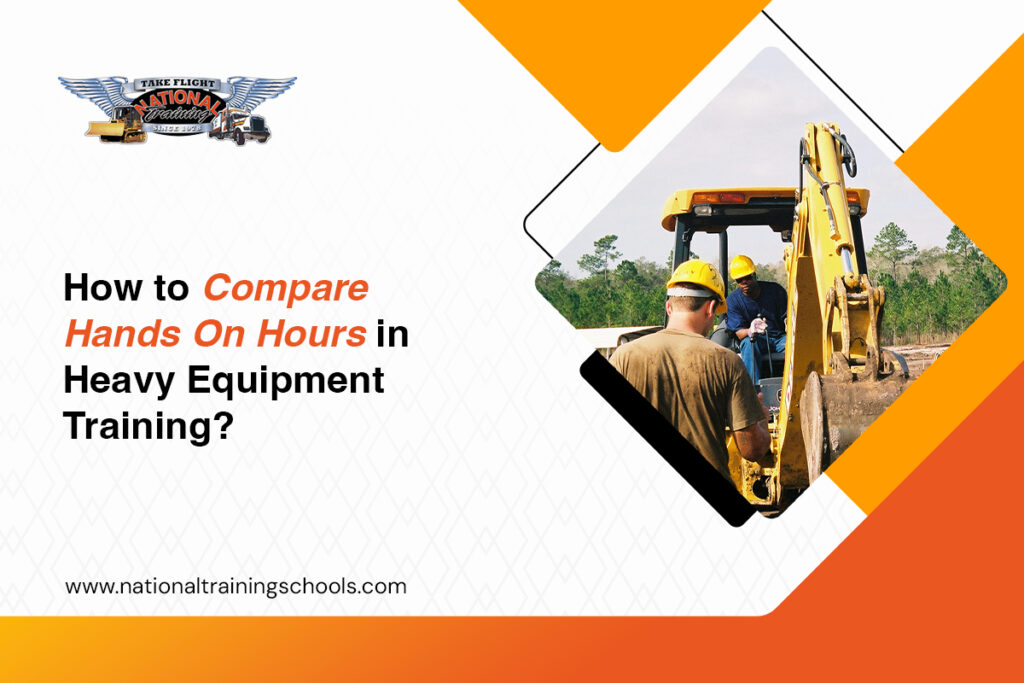
Comparing hands-on training hours requires more than checking the total length of a course. Prospective students should distinguish classroom instruction, practical exercises, equipment observation, and individual operating time. A heavy equipment operator training program should clearly explain these differences so students can evaluate the instruction before enrolling.
Why Do Hands-On Training Hours Matter?
Hands-on training gives students opportunities to apply operating concepts under instructor supervision. However, published practical training hours do not always represent the time each student personally operates machinery.
For example, one school may include equipment demonstrations and group observation within its practical hours. Another may organize training around individual operating assignments. When comparing a heavy equipment operator training program, students should understand these differences because published hour totals are not always directly comparable.
The important question is how those hours are organized and what students are expected to accomplish.
How Can You Compare Classroom Hours and Practical Training?
Start by requesting a written curriculum showing how instructional time is divided.
Classroom lessons may cover equipment controls, operating procedures, inspections, safety awareness, and basic site work. Practical exercises provide opportunities to apply those concepts with equipment.
National Training, Inc., based in Green Cove Springs, Florida, publishes a breakdown for its Heavy Now program. The curriculum identifies 208 clock hours, consisting of 72 classroom theory hours and 136 hours of equipment projects and exercises.
Importantly, the published catalog explains that equipment project time includes student observation and equipment operation. Students work in groups of two assigned to a machine, and time spent on individual projects may vary according to progress.
This distinction helps prospective students interpret the numbers without assuming every practical hour represents personal operating time.
For additional details, review the institution’s Heavy Now course information.
What Should You Ask About Individual Equipment Time?
A useful comparison considers how instruction is organized, not simply how many hours appear in an advertisement.
Before choosing a heavy equipment operator training program, ask how equipment rotations work, whether instructors supervise practical exercises, and how students receive feedback.
Students should also clarify whether practical hours include observation, demonstrations, or simulator activities.
These questions become especially important when comparing broader programs covering multiple machines with courses focused on one equipment type.
A longer course may provide a wider instructional scope, but additional hours alone do not establish greater proficiency or better employment prospects.
Before making an enrollment decision, request the current curriculum and discuss how practical training is allocated. National Training provides school catalogs that prospective students can review when comparing program requirements.
What Makes a Training Program Worth Considering?
A meaningful evaluation combines instructional hours with curriculum transparency, supervision, training objectives, and total enrollment costs.
Students should consider whether the course addresses the machinery relevant to their interests and whether the institution explains its assessment and completion requirements.
It is equally important to distinguish completing a school program from receiving an occupational license or professional certification.
At National Training, successful completion of the applicable program results in an NTI Certificate of Completion. This document records completion of the school’s training program; it does not automatically establish professional operator certification or employment qualification.
National Training is Licensed by the Florida Commission for Independent Education, License No. 335.
The institution provides education and training, not employment. Individual employment outcomes depend on employer requirements, experience, qualifications, and labor-market conditions.
Making an Informed Training Decision
The strongest comparison considers what students will learn, how instruction is delivered, and what the school can document.
Before selecting a heavy equipment operator training program, compare written curricula, practical training arrangements, completion requirements, and total costs. Our published program information can help prospective students understand these factors without relying on promotional claims alone.
Review the tuition and fees information and contact National Training, Inc. to discuss current enrollment requirements or arrange a campus visit.
Frequently Asked Questions
1. Do more hands-on training hours mean better equipment training?
Not necessarily. More hours may provide additional instructional opportunities, but training quality also depends on supervision, curriculum coverage, equipment access, and student participation. Compare how practical hours are allocated rather than assuming a longer course automatically produces better operating skills.
2. Are practical training hours the same as individual operating hours?
No. Practical training may include equipment observation, demonstrations, supervised exercises, and individual operation. National Training’s Heavy Now catalog specifically includes observation and operation within equipment project time. Prospective students should ask how individual operating opportunities are organized.
3. What should beginners check before enrolling in heavy equipment training?
Beginners should review admission requirements, equipment coverage, practical instruction, safety lessons, completion criteria, and total costs. They should also understand what documentation successful students receive and whether the curriculum aligns with their goals. Completing training does not guarantee certification, licensing, or employment.