How Do Heavy Equipment Simulators Support Operator Training?
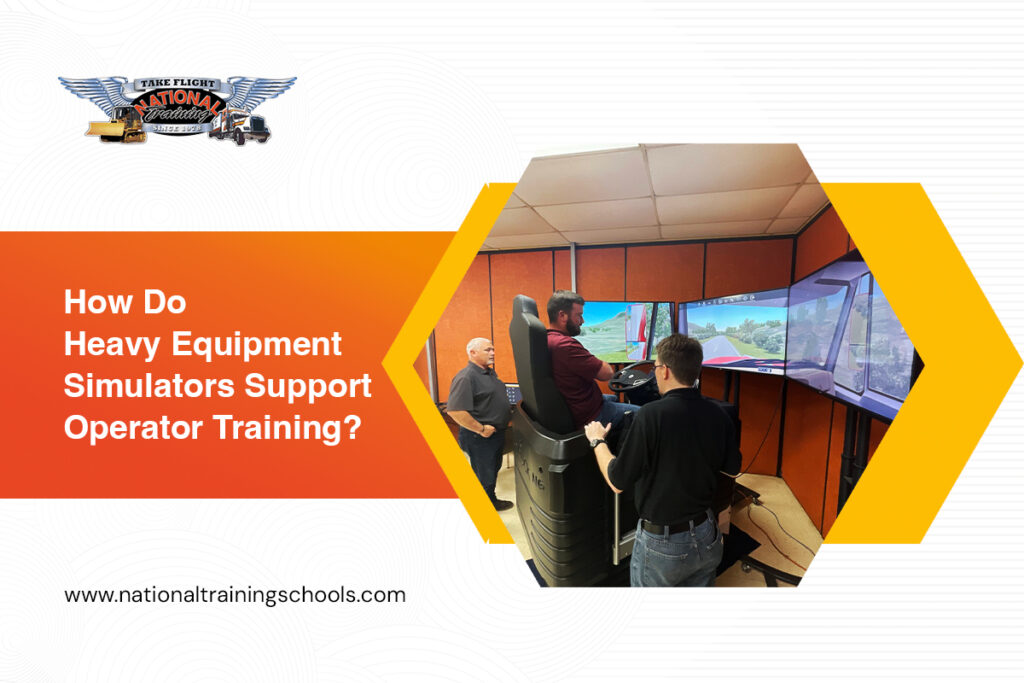
Learning to operate heavy machinery requires more than understanding how a machine works. Operators need to develop control, coordination, safety awareness, and the ability to carry out tasks accurately. For beginners, gaining these skills takes time and supervised practice. Heavy equipment simulators support the learning process by allowing trainees to become familiar with machine controls and practice basic operating techniques in a controlled environment before moving on to real equipment. Simulators are most effective when combined with classroom instruction and hands-on training.
What Are Heavy Equipment Simulators?
Heavy equipment simulators are training systems designed to replicate aspects of operating construction machinery. Depending on the system, they may include simulated controls, visual displays, and interactive exercises that respond to the trainee’s movements.
These systems allow students to practise basic machine operations without relying exclusively on full-size equipment. For example, an excavator simulator may help a trainee understand how the boom, arm, and bucket work together, while a loader simulation may introduce the movements involved in handling materials.
The purpose is to help students become familiar with equipment controls and operating principles before applying what they have learned during practical training.
How Do Simulators Improve Operator Training?
One of the main advantages of simulator-based instruction is the opportunity to practise in a controlled setting. New operators can learn how different controls affect machine movements without immediately facing the physical risks associated with operating full-size equipment. Instructors can also identify mistakes and explain how to correct them before students progress to more demanding exercises.
Simulators also allow students to repeat specific movements. Operating machinery requires coordination, and beginners may need several attempts to perform a task smoothly. Repeating an exercise can help them understand how different control inputs work together and where they need further practice.
Another benefit is exposure to different types of equipment. Excavators, bulldozers, and wheel loaders are designed for different tasks, so their operating techniques vary. Simulated exercises can introduce students to these differences and help them understand the basic principles behind each machine’s operation.
However, simulator training does not automatically make someone proficient at operating heavy machinery. Its value depends on the quality of instruction, the exercises available, and how effectively the training connects to practical experience.
Why Is Hands-On Equipment Training Still Necessary?
Although heavy equipment simulators can help students develop familiarity with machine controls, they cannot fully reproduce every condition found on a construction site. Actual machinery responds to terrain, material loads, ground conditions, and other factors that may be difficult to represent accurately in a simulation.
Practical training gives students the opportunity to apply their knowledge while working with real equipment under instructor supervision. It also helps them understand equipment inspections, safe operating procedures, machine positioning, and the importance of remaining aware of their surroundings.
For this reason, simulator exercises should complement rather than replace hands-on instruction. Classroom learning explains operating principles, simulation provides an additional opportunity to practise, and real equipment training allows students to apply those principles in practical situations.
Conclusion
Heavy equipment simulators support operator training by helping students understand machine controls, practise basic movements, and become familiar with operating techniques in a controlled environment. They can make the learning process more structured and give beginners an opportunity to work on fundamental skills before handling actual machinery. However, effective operator training requires more than simulation alone. Combining classroom instruction, repeated practice, and supervised operation of real equipment provides a more complete foundation for learning. For those exploring training options, National Training Schools offers a program that brings these learning methods together, allowing prospective students to review how simulator practice fits into a broader heavy equipment training curriculum.
FAQs
- Can heavy equipment simulators track a trainee’s performance?
Yes. Some simulators record performance data, such as task completion, control inputs, and operating errors, helping instructors assess progress.
- Do trainees need computer skills to use heavy equipment simulators?
Usually, no advanced computer skills are required. Instructors can guide beginners through the simulator’s controls and training interface.
- Are heavy equipment simulators suitable for experienced operators?
Yes. Experienced operators may use simulators to practise unfamiliar procedures or develop skills for different equipment types, depending on the system.
- Can simulator training help identify areas for improvement?
Yes. Feedback from certain simulator systems can help trainees recognize recurring mistakes and identify skills that need additional practice.
- Are all heavy equipment training simulators the same?
No. Simulators vary in their controls, software, supported machines, realism, and available training exercises.