How do heavy equipment simulators support operator training?
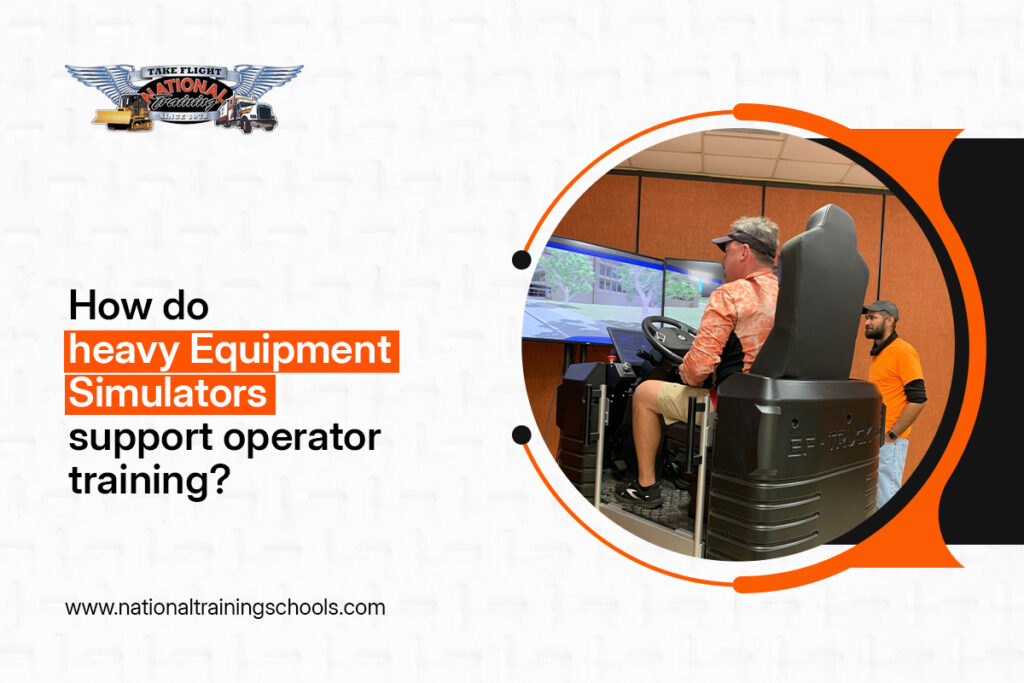
Learning heavy equipment controls on paper is one thing. Understanding how those controls relate to machine movements takes practice. Heavy equipment simulators give students a controlled environment where they can work with controls, movements, and operating techniques as part of their operator training.
At National Training, heavy equipment simulators support training for excavators, bulldozers, wheel loaders, and tractor loader backhoes. We use simulator instruction as one component of a broader learning experience that also includes classroom instruction and practical field training. The simulator is not presented as a substitute for the rest of the training.
How Do Heavy Equipment Simulators Fit Into Operator Training?
Simulator instruction lets students work with operating elements associated with a particular machine in a controlled setting. Students can become familiar with how controls relate to movements and operating techniques before connecting that instruction with other parts of the course.
This matters when you are comparing training options. Knowing that a school has a simulator tells you very little on its own. Look at the machines represented, what the simulator instruction covers, and whether the program also includes practical equipment training.
If you want to train across multiple types of machinery, review our Heavy Now program to see its current curriculum and training structure.
Simulator Training Covers Specific Equipment
Our simulator instruction covers four equipment categories:
- Excavators
- Bulldozers
- Wheel loaders
- Tractor loader backhoes
This equipment specific approach gives students a clearer idea of what they will work with during simulator instruction. With a heavy equipment simulator, students can focus on the controls and movements associated with a particular machine. An excavator simulator, for example, represents different controls and movements from those associated with a bulldozer.
National Training also offers individual heavy equipment courses, including articulated loader, bulldozer, excavator, and tractor loader backhoe training. Students should review the applicable course rather than assume that one simulator experience represents every type of heavy equipment training.
Simulation Is One Part of the Training Experience
Our heavy equipment training does not rely on simulation alone. National Training describes its training approach as a combination of classroom instruction, simulator training, and practical field training with real construction and earthmoving equipment.
That distinction gives prospective students a better way to judge a program. Simulator instruction provides a controlled setting for learning operating elements, while practical field training gives students experience with equipment as part of their course.
Keeping these components separate also prevents a common misunderstanding. Simulator participation should not be treated as the same thing as completing every part of a heavy equipment training program.
A Practical Checklist for Comparing Training
A simulator can look impressive, but the training behind it matters more. Before making an enrollment decision, check the details that affect what you will actually study:
- Identify which equipment the simulator represents.
- Review the course for the machine you want to learn.
- Look at the classroom instruction described for that course.
- Check how practical equipment training fits into the program.
- Ask admissions about current program details when something is unclear.
These simple checks help you compare the substance of the training instead of making a decision based on simulator technology alone.
The Stronger Question Before Choosing a Program
Careful students look beyond whether simulator technology is available. The more useful question is whether simulator instruction connects with a broader heavy equipment training experience.
Our published information gives students that context. We identify the machines covered by simulator instruction while also explaining that heavy equipment training includes classroom and practical field components. This makes it easier to understand the simulator’s role before deciding whether a particular course fits your training interests.
Clear Training Information Supports Better Decisions
Students should know what a simulator represents before treating it as a reason to choose a program. Equipment coverage, simulator instruction, classroom learning, and practical training all provide useful context when comparing options.
National Training uses heavy equipment simulators within its broader approach to operator training rather than presenting simulation as the complete learning experience. If you want to see the training environment for yourself, you can schedule a campus visit and learn more about the training you are considering.
FAQs
1. What do you learn on a heavy equipment simulator?
Heavy equipment simulator training helps students work with machine controls, movements, and operating techniques in a controlled environment. At National Training, simulator instruction forms part of a broader learning experience that also includes classroom instruction and practical field training. This gives students different training environments rather than treating simulation as the complete course experience.
2. Can heavy equipment simulators replace training on real equipment?
No. National Training does not present simulator instruction as a replacement for practical equipment training. Its heavy equipment training approach includes simulator instruction alongside classroom learning and practical field training with real construction and earthmoving equipment. When comparing programs, students should look at how these different training components fit together instead of judging a program by simulator availability alone.
3. What types of heavy equipment simulators does National Training use?
National Training identifies simulator instruction for excavators, bulldozers, wheel loaders, and tractor loader backhoes. Because each machine involves its own operating elements, students should review the applicable heavy equipment course to understand the training connected with the equipment they want to study. Current program details can also be confirmed directly with the admissions team.